 Sydney Young Portfolio
Problem
For this project, I was tasked with either designing a new currency for a fictional place or redesigning an existing currency. I chose to create a currency for the fictional land of Winnie the Pooh. Since Winnie the Pooh is such a classic story and has been redone multiple times, I was challenged with deciding how I was going to represent it uniquely while staying true to the story and characters.
Ideation

I started off my project by researching the story of Winnie the Pooh, such as the location and the meaning behind the characters. I want to focus on the different characters from the story of Winnie the Pooh. These characters were first introduced to readers in 1926 when author A.A. Milne published Winnie-the-Pooh, a series of stories he created for his son based on his toy animals. Even though the characters are based on real-life stuffed animals, they have also been known to relate back to human behaviors and reflect human struggles. I wanted to highlight the differences between each character and what makes them unique. I then began creating a mood board to help me organize my research and collect visual inspiration.
I wanted each bill to highlight a different character and what makes them unique and special. Having each character be separate helped to highlight that they are all special in their own way and not make it seem like one character is better than the other, an idea that Milne brings up in the introduction of the book.
Design Process
Front Design
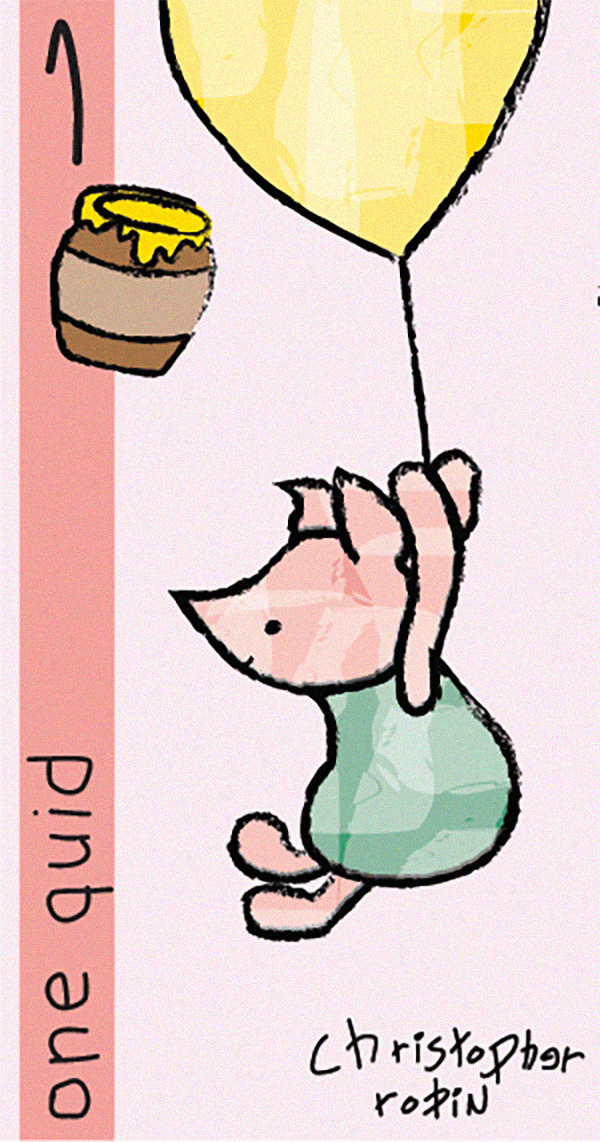

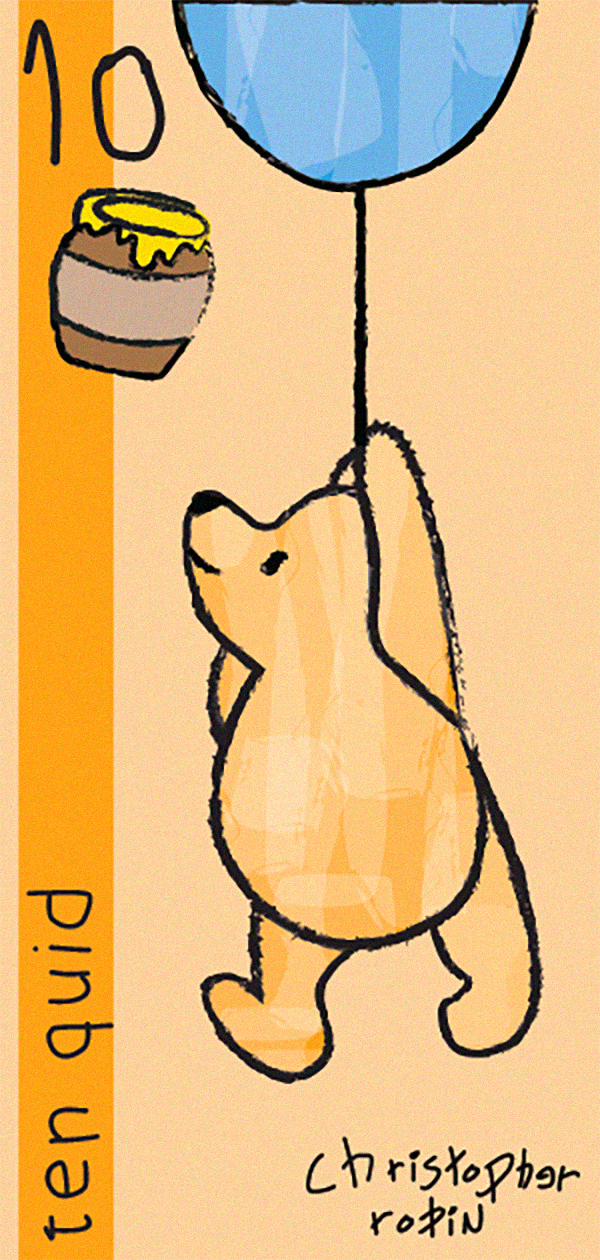
I started by designing the front of each bank note. The three banknotes are 1, 5, and 10 because the characters are a part of a child’s world, so they have no use for large amounts of money, and 10 seems like a lot to a child, which is why it is the largest amount. Piglet is on the 1 bill because he is the smallest out of all the other characters, so he is on the smallest value bill. Pooh is on the 10 bill because he is the main character of the stories, and the stories would not exist without him, so he will be on the largest value bill. Eeyore is on the 5 bill because he is bigger than Piglet, but not as essential to the stories as Pooh is. For the design, I had them all being pulled up by a balloon because it is something that happens a lot in the stories, and it helped to unify the design of the currency.
Back Design

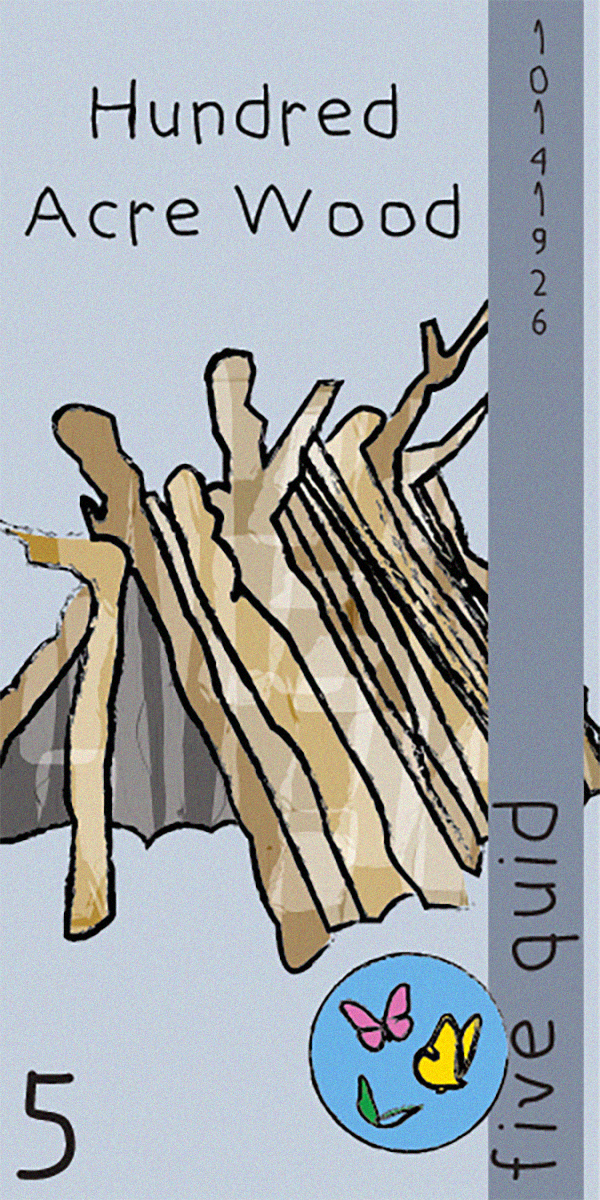
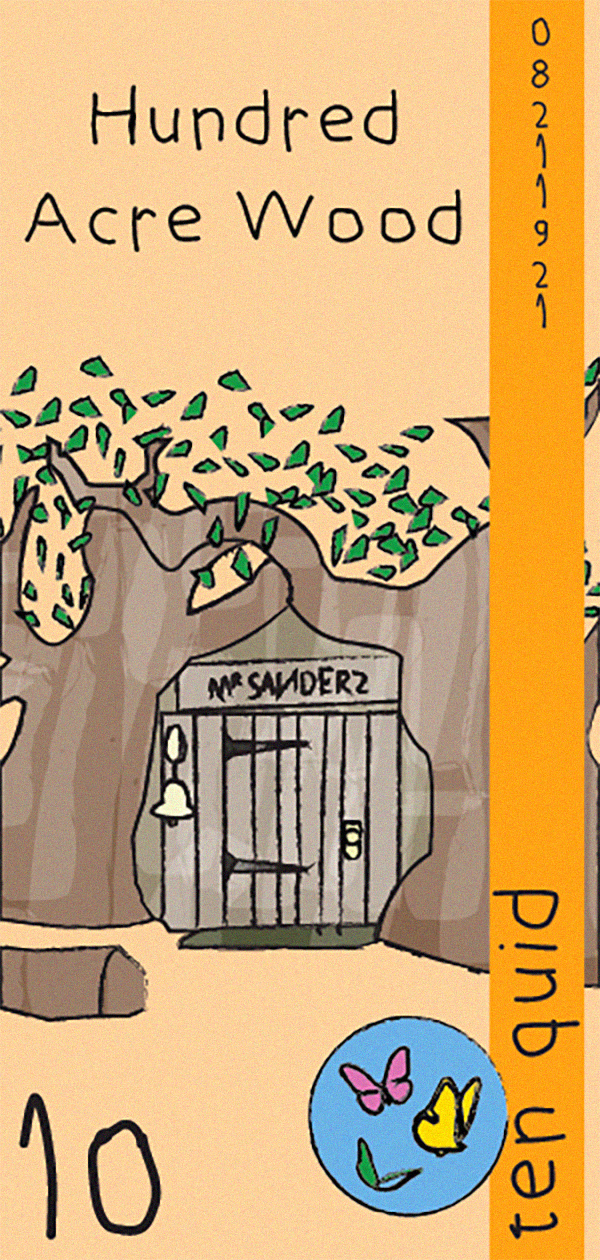
I then went on to design the back of each bank note. On the back, I wanted to include the home of the respective character on the front. This provides another perspective on the characters and a deeper look into the stories.
Decor Sheet

After I created the currency, I created a decor sheet to help describe what some of the smaller details were and the meaning behind them. For example, the serial number is also the character on that bank note’s birthday. With this project, every element of the currency had to be intentional and serve a purpose, so the decor sheet helps to showcase the research and intent that went into the design.
Final Design
